
The possible instances of front running at Quant Mutual Fund have likely pushed the Securities and Exchange Board of India (Sebi) to expedite the implementation of an institutional mechanism framework designed to curb such market abuses. This framework, approved by the Sebi board in April, was slated to take effect six months after its notification. But, recent developments have set the wheels of regulation turning faster.

'The biggest near-term risk to Indian equities is the outflow of investments to China as tactical trades by foreign investors.'

A few days back, Finance Minister Nirmala Sitharaman urged the start-up community and public to deal in cryptocurrency with caution because everything that was floating around was not currency. In the first week of August, the country's top nine crypto exchange platforms were summoned by the Directorate of Enforcement (ED) in Hyderabad. The exchanges were questioned for money laundering, especially over a number of Indian non-banking financial companies and their fintech partners for predatory lending practices in violation of the Reserve Bank of India (RBI) guidelines and by using tele-callers who misuse personal data and use abusive language to extort high interest rates from the loan takers.

'I get enormous pleasure from seeing the uplift of an underprivileged or poor person.' 'I feel elated when I walk on the street and see someone who pushes a handcart talking on a cell phone.' A revealing glimpse from Peter Casey's The Story of Tata: 1968 to 2021.

Standard Chartered said it will stop providing financing to parts of the diamond and jewellery industries as part of a review of its exposure to risky sectors.

The government is contemplating changes to the Insolvency and Bankruptcy Code (IBC) to deal with environmental claims and liabilities of defaulting companies to make the law future-ready and meet climate action goals, sources told Business Standard. Currently, the IBC has various categories of claims and creditors, including those related to environmental liabilities.

The Indian pharmaceutical market (IPM) grew 6.8 per cent to touch a turnover of ~1.93 trillion in calendar year 2023, despite volumes going down marginally by 0.9 per cent. This indicates the price increase has been the major growth driver. Growth in the moving annual turnover (the previous 12 months' turnover) in December was 5.1 per cent and that in new product introduction 2.6 per cent, while volumes dipped 0.9 per cent, leading to an overall growth rate of 6.8 per cent, according to the data from market research firm Pharmatrac.

'If attacks escalate, there is a risk the Suez Canal may be closed.'

In India, fast-moving consumer goods (FMCG) majors continue to hold sway, with incumbent brands cornering 65 per cent of the market share, shows a Bain & Company report. While identifying the continued preference of Indians for incumbent brands, the report says that the dominance of general trade in the country has allowed national brands to maintain their supremacy. The low penetration of e-commerce in the country has also helped large brands.

From attractive EMIs to assured buyback guarantees, luxury carmakers have lined up a slew of offers to woo customers this festival season to address dwindling sales amid rising inventories.

'When it is unpaid, sometimes, they don't take you seriously.' 'Work is not reviewed, and there is no effort in making interns learn.'

There was no smooth surge in middle class prosperity for foreign businesses to tap into because of the Indian economy was mismanaged, argues Debashis Basu.

According to a senior official, Sebi has written to various stakeholders under its jurisdiction with regard to the requirement of FIs to report under CRS.

'There are ominous portents of an isolationist administration not only building a physical wall to the south to prevent unwanted immigrants from entering the land of milk and honey, but also trade walls not just against China, but all nations,' foresees Sreekant Sambrani.

While most analysts are expecting poor results from oil marketing companies (OMCs) in the first quarter of 2024-25 (Q1FY25) and even in the first half (H1) of FY25, GAIL (India) could be an outlier. Upstream producers, Oil and Natural Gas Corporation (ONGC) and Oil India (OIL) could do well due to strong crude and gas prices, but refiners are likely to see weak margins and the impact of frozen prices during the election period will also be negative.

'There is not any negative connotation associated with it.'

'Three manufacturing sectors can create jobs by the million: Apparel, food, and electronic assembly.' 'Let's talk to them and ask them what it would take to scale by a factor of ten,' suggests Naushad Forbes.

Fund managers may end up losing out on crucial information during market hours, leading to information asymmetry vis-a-vis other institutional investors such as alternative investment funds, insurance players, or foreign portfolio investors.

In the current calendar year, small and medium enterprises (SMEs) have witnessed an impressive surge in initial public offerings (IPOs), surpassing the 2018 record. Over 150 SME IPOs have been introduced to the market, breaking the previous record of 141 set in 2018. According to data from PRIME Database, a primary market tracking firm, 147 companies successfully concluded their debut share sales by the end of October, raising a cumulative Rs 3,727 crore.

Food delivery major Swiggy has received approval from its shareholders for a $1.25 billion initial public offering (IPO), according to filings made with the Registrar of Companies sourced by Tofler. The Bengaluru-based firm plans to raise as much as Rs 3,750 crore (around $450 million) via a fresh issue and up to Rs 6,664 crore (around $800 million) through an offer-for-sale (OFS) component, the filings stated.

India has historically not had a strong compliance mechanism around insider trading. This is in stark contrast to developed countries.

'There will be 200 ITIs developed as hubs, while 800 will be developed as spoke, connected with five National Skill Training Institutes.'

Stocks of Hindustan Petroleum Corporation Limited (HPCL), Bharat Petroleum Corporation Limited (BPCL) and Indian Oil Corporation Limited (IOCL) have more headroom left despite the sharp run in the last few weeks, suggests a recent report from Morgan Stanley. Stocks of these oil refining and marketing companies (OMCs), it believes, are seeing multiples re-rate as investors reassess long-term growth prospects. "IOCL trades at one year forward P/BV of 1.2x, 19 per cent below +1 standard deviation (SD); BPCL trades at one year forward P/BV of 1.5x, near historical averages; HPCL trades at one year forward P/BV of 1.5x, near +1SD," Morgan Stanley said.

It aims at tackling issues such as child labour, mistreatment of workers, and denial of basic wages, among others. There will also be penalties for non-compliance.

'The deal pipeline across products is robust for 2024.'

'They are attacking my wife; they are attacking our 13-month-old daughter. They are saying that I do drugs.' 'I'm giving an open challenge to Mr Nawab Malik and Ms Sana Malik let's go to the labs and let's do the medical test of our family and your family.'

'Like every Budget, this time, too, there is chatter around tinkering with the long-term capital gains tax.' 'Investors may not want to jump into the markets until there is clarity on this front.'

Urals and Sokol accounted for every 4 out of 5 barrels of Russian supplies to India last year.

Promoters and top executives intending to buy or sell shares of their companies might soon have to inform the market well in advance for such transactions.
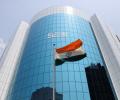
If Hindenburg or its partner do not join the investigation, then Sebi may pass an ex-parte order against it, which may be enforced as a foreign award in US courts.

Anamika Pareek answers five most frequently asked questions about investing in silver ETFs
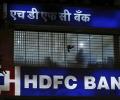
HDFC Bank's latest shareholding data showed that the room for foreign investment has fallen just 5 basis points short of the threshold set by Morgan Stanley Capital International (MSCI) to fully include the stock in its indices. Currently, the index provider has applied an adjustment factor of 0.5 since the foreign room is less than 25 per cent. Removal of the adjustment factor will result in inflows of a massive $4.8 billion (Rs 40,000 crore) into HDFC Bank, according to Brian Freitas, a New Zealand-based analyst with Periscope Analytics.

Milk supplies could improve with the monsoon, provided the rains are not excessive.

Keen to capitalise on the growing geopolitical support from African nations after the recently concluded G20 Summit, India is working with the African Union to hold the fourth India-Africa Forum Summit later this year in Kenya's Nairobi, sources said. Prime Minister Narendra Modi is expected to attend the mega meet along with as many as 50 African leaders, they added. First held in New Delhi in 2008, the India-Africa Forum Summit marked India's initial diplomatic efforts to seek a comprehensive partnership with the African bloc of nations as a whole, at a time when China had begun its own outreach.

Recently, the government relaxed foreign direct investment (FDI) norms for the space sector by allowing 100 per cent FDI in manufacture of components, systems or sub-systems for satellites, ground segments, and user segments. It also permitted 74 per cent FDI in satellite manufacturing and operation as well as satellite data products and 49 per cent in development of launch vehicles and spaceports. Following this, stocks of related companies saw an uptick on the bourses.

Global private equity (PE) firms are successfully offloading large equity stakes in domestic companies in the open market, taking advantage of buoyant conditions. Strong domestic liquidity support and an upward trending market have underpinned over a dozen PE exits worth $2.5 billion, data compiled by Business Standard shows. The figures exclude PE exits during maiden share sales and shares sold by strategic investors, such as SoftBank and Ant Group in new-age companies.
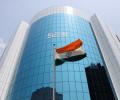
Only a fifth of foreign portfolio investors (FPIs) in breach of the market regulator-specified thresholds may need to provide enhanced disclosure on ultimate beneficiaries, thanks to exemptions being provided, according to people in the know. The ultimate beneficial ownership (UBO) disclosures, for FPIs with over 50 per cent holding in a single corporate group or over Rs 25,000 crore exposure to Indian assets, will be required from February 1. But, depending on their category, FPIs will have 10-30 working days to submit these granular details.

The broking industry's pecking order is set to change with Groww, a fin-tech startup from Bengaluru, poised to topple the industry's poster boy, Zerodha, as the leading brokerage in the number of active investors. According to data provided by the portal Topsharebrokers.com, Zerodha has 6.32 million active investors, while Groww is at 5.99 million. It is projected that Groww, which has grown at a much faster clip over the past two years, will surpass Zerodha this month, or next month.

The BSA Gold Star is launched....Ola Enters e-motorbikes Biz... Bajaj, TVS To Enter e2Ws Market...

US-based retail giant Walmart is looking to source toys, shoes and bicycles from Indian suppliers as the company is targeting to increase its exports from India to USD 10 billion annually by 2027. The company also wants to develop new suppliers in categories such as food, pharmaceuticals, consumables, health and wellness, and apparel and home textiles, a company spokesperson told PTI. Officials from the Bentonville-headquartered firm recently held a virtual meeting with several domestic toy manufacturers in India.
